



portable hoyer lift
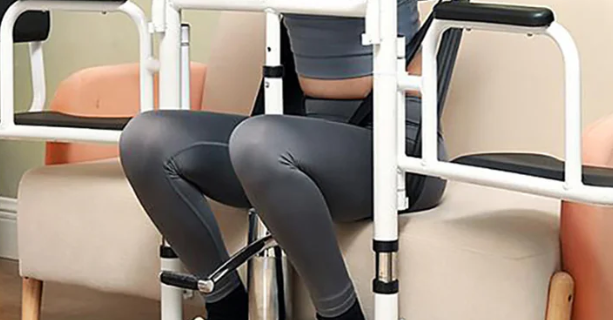
Portable Hoyer Lift: A Revolutionary Solution for Mobile Care
The Mobility Revolution for Caregiving Freedom
In today's era of advancing medical care technology, the portable Hoyer lift is emerging as a critical bridge connecting institutional care and home care. This care device, which integrates lightweight design, rapid assembly, and multi-functional applications, has completely transformed the limitation of traditional lifts being usable only in fixed locations. According to the Global Mobile Medical Equipment Market Report, the market size for portable patient lifts is projected to reach USD 4.8 billion by 2025, with a Compound Annual Growth Rate (CAGR) of 14.2%. This growth not only reflects the driving force of technological innovation but also underscores society's urgent demand for flexible care solutions.
Engineering Breakthroughs: The Perfect Balance of Lightweight and Performance
The core technological breakthrough of the modern portable Hoyer lift lies in its modular, lightweight structural design. Utilizing an aerospace-grade aluminum alloy frame and carbon fiber composite materials, the standard model's total weight is controlled within 18-25 kilograms, a reduction of over 60% compared to traditional models, while still maintaining a load capacity of 180-250 kilograms, meeting medical standards. The unique rapid assembly system employs a snap-fit connection design, allowing for full assembly in 3-5 minutes without any tools. When disassembled, its storage volume is equivalent to that of a medium-sized suitcase.
The intelligent power system achieves dual optimization of energy efficiency and portability. A brushless DC motor paired with a planetary gear reduction unit operates at noise levels below 40 decibels, suitable for use in various quiet environments. The lithium battery management system is equipped with intelligent charging control, providing all-day use (approximately 30 complete transfers) with just 2 hours of charging. The emergency manual operation device features a labor-saving lever design, enabling a single person to smoothly complete lifting operations even without power.
The adaptive base design demonstrates engineering ingenuity. A four-wheel independent suspension system with an automatic locking function ensures stable movement across various floor conditions, including carpets, tiles, and wooden floors. 360-degree swivel front wheels combined with directional rear wheels guarantee agile maneuverability in confined spaces. The extendable leg adjustment range of 30-50 centimeters accommodates different bed and chair height requirements.
Safety System: Multi-Layer Protection for Mobile Environments
The portable Hoyer lift has established a five-dimensional mobile safety architecture, specifically designed for non-fixed usage environments:
Structural Safety Dimension: Adopts a dynamic stability algorithm. A real-time center-of-gravity monitoring system continuously calculates stability parameters during equipment movement or patient transfer using accelerometers and gyroscopes. It automatically issues an audible and visual alarm when the tilt risk reaches a warning threshold. Four-point automatic leveling legs extend when the device is stationary, increasing the support area by 40%.
Operational Safety Dimension: Integrates environmental sensing technology. An ultrasonic obstacle detection system has a detection radius of 1.5 meters, providing early collision warnings. Weight distribution monitoring identifies improper loading conditions and prompts the operator to adjust the sling position or patient posture. The speed limit system automatically adjusts based on the operational scenario—decelerating when approaching obstacles and accelerating in open spaces.
Patient Safety Dimension: Considers the unique aspects of mobile transfers. Progressive start technology avoids discomfort caused by sudden movements; the suspension system is equipped with a bidirectional buffer device to absorb vibrations from uneven surfaces; the posture maintenance function ensures body stability throughout the transfer; emergency stop buttons are redundantly placed at all critical locations on the device for easy access.
Electrical Safety Dimension: Meets mobile usage requirements. Its waterproof and dustproof design achieves an IP54 rating, suitable for a variety of indoor and outdoor environments. Intelligent battery management prevents overcharging and deep discharging, extending battery life to 1500 charge-discharge cycles. A low battery warning begins at 20% remaining power, and non-essential functions are limited at 10%.
Data Safety Dimension: Protects privacy information. Local data is stored with encryption, and wireless transmission uses AES-256 encryption. Operational logs record the complete transfer process, facilitating quality traceability and problem analysis. Device authentication ensures that only authorized personnel can operate it.
Sling System: Specialized Optimization for Portable Use
The sling system of the portable Hoyer lift has undergone specialized ergonomic optimization, balancing safety and portability:
Quick-Donning Design significantly improves efficiency. A magnetic-assisted connection system simplifies and ensures accuracy when docking sling hooks; a color-coding system ensures the correct donning sequence; a pre-adjusted sizing system reduces on-site adjustment time; a single-operator design allows caregivers to complete the entire process independently.
Material Technology Upgrades adapt to mobile needs. Antibacterial, quick-drying fabrics achieve a drying rate of over 80% within 30 minutes after transfer; UV protection treatment is suitable for outdoor use; tear resistance reaches 1500N, ensuring safe usage; machine-washable design simplifies maintenance.
Intelligent Monitoring Integration provides additional safeguards. Micro pressure sensors monitor critical support points; temperature and humidity sensors alert to skin health risks; a usage count function indicates maintenance cycles; wireless synchronization transmits data to the care record system.
Application Scenarios: Flexibility for Multi-Environment Adaptation
The portable Hoyer lift demonstrates exceptional environmental adaptability, covering six major usage scenarios:
Home Care Applications meet personalized needs: Adapt to standard home space dimensions, with a minimum doorframe passage width of 65 cm; quiet operation design does not disturb family life; an aesthetic appearance blends into the home environment; simple operation is suitable for family members to use.
Community Service Support promotes social participation: Easy to move between community centers and day care stations; rapid setup supports temporary activities; compatible with various transportation vehicles; battery life meets all-day outing needs.
Institutional Care Supplement improves resource efficiency: Serves as a supplement to fixed equipment to meet peak-hour demands; flexible deployment between different wards; supports special needs such as outpatient trips; emergency backup ensures service continuity.
Rehabilitation Training Assistance promotes functional recovery: Precise control of lifting height supports progressive standing training; stable support ensures training safety; data logging tracks rehabilitation progress; multi-position support meets different training needs.
Special Environment Adaptation expands usage range: An outdoor version adapts to courtyards, gardens, and other environments; a travel version meets vacation or family visit needs; a vehicle-mounted version supports transportation transfers; a waterproof model is suitable for bathroom use.
Emergency Response Equipment provides immediate support: Rapid deployment for emergency situations; manual operation ensures usability during power outages; a robust structure withstands temporary environments; standard interfaces are compatible with a variety of accessories.
Economic Value: The Cost-Effectiveness of Flexible Care
From an economic perspective, the portable Hoyer lift offers a unique value proposition:
Procurement Cost Advantage: Prices range from 80,000 to 150,000 yuan, 30-40% lower than traditional fixed models; modular design allows for on-demand configuration, avoiding functional redundancy; clear upgrade paths enable adding functional modules as needed; abundant leasing options are available, with monthly rent at 1.5-2% of the equipment price.
Usage Cost Optimization: Energy consumption reduced by 40%, saving approximately 500-800 yuan annually on electricity; maintenance costs controlled at 1.2% of the equipment value per year; reduced training costs, with a learning curve 50% shorter than traditional equipment; lower transportation costs, as standard vehicles can transport it.
Resource Efficiency Improvement: A single device can serve multiple locations, increasing utilization by 60-80%; rapid conversion supports continuous use, reducing waiting time by 70%; lower space requirements, needing only 0.5 square meters for storage; optimized manpower requirements, with single-operator capability as standard.
Risk Cost Control: Caregiver injury risk reduced by 85%; patient safety incidents decreased by 90%; equipment damage rate lowered by 60%; service interruption time shortened by 75%.
Return on Investment (ROI) Analysis: Based on a 5-year service life, the average daily cost is 45-85 yuan; efficiency improvements allow investment recovery within 12-18 months; the implicit benefits from improved care quality are difficult to quantify; the value of emergency backup provides additional security.
Technological Innovation: The Future Direction of Mobile Care
Portable Hoyer lift technology is evolving towards greater intelligence, lighter weight, and higher integration:
Artificial Intelligence Applications will enable the device to: Have adaptive learning capabilities to optimize operations based on user habits; perform predictive maintenance to identify potential failures in advance; implement intelligent path planning to automatically select the optimal transfer route; conduct anomaly detection to identify non-standard usage situations.
Internet of Things (IoT) Connectivity creates a care network: Inter-device collaboration supports complex transfer tasks; remote expert guidance is achieved through augmented reality; cloud data synchronization ensures care continuity; intelligent scheduling optimizes equipment usage arrangements.
New Material Technologies bring performance breakthroughs: Graphene composite materials further reduce weight; self-healing materials extend service life; deformable structures adapt to more scenarios; environmentally friendly materials reduce the environmental burden.
Energy Technology Innovation enhances mobility: Wireless charging supports on-demand power replenishment; solar assistance extends usage time; energy recovery utilizes kinetic energy from movement; fuel cells provide longer battery life.
Selection Guide: Professional Decision-Making for Mobile Care
Choosing a portable Hoyer lift requires a systematic evaluation system:
Needs Analysis Phase should assess: Diversity of usage scenarios (home, community, institution, outdoor); patient population characteristics (weight, mobility, special needs); operator situation (number, training level, physical condition); transportation and storage conditions (vehicle space, storage environment, charging facilities).
Product Evaluation Dimensions should consider: Portability indicators (weight, size, assembly time); performance parameters (load capacity, lifting range, battery life); safety features (stability, protection functions, certification standards); ease of use (user interface, learning difficulty, maintenance requirements).
Trial Verification Focus includes: Actual scenario testing (evaluation in real usage environments); performance limit testing (verification of load-bearing and safety limits); durability assessment (checking reliability over long-term use); compatibility verification (testing coordination with existing equipment).
Service Guarantee Evaluation should examine: Training support (on-site training, online resources, continuing education); technical support (response time, problem-solving ability, spare parts supply); warranty policy (coverage, duration, terms); upgrade services (software updates, hardware upgrades, function expansion).
Industry Impact: Redefining Care Models
The portable Hoyer lift is reshaping the delivery of care services:
Service Model Innovation: From fixed-location services to mobile home services; from appointment-based services to immediate response; from professional institutional services to independent home care; from single-function to comprehensive support.
Resource Allocation Optimization: Equipment sharing improves utilization; on-demand usage reduces idle time; flexible deployment responds to changes; standardized operations simplify management.
Quality Standard Enhancement: Safety standards for mobile environments; efficiency standards for rapid services; quality standards for multi-scenario applications; user-friendly experience standards.
Personnel Capability Development: Professional skills for mobile care; adaptability for multi-environment response; operational skills for technical equipment; responsibility for independent work.
Social Value: The Practice of Inclusive Care
The portable Hoyer lift has generated extensive social impacts:
Home Care Support: Enables individuals with severe care needs to continue living at home; reduces the physical burden on family caregivers; lowers the economic pressure of home care; improves the quality and safety of home care.
Community Participation Promotion: Supports people with disabilities in participating in community activities; facilitates social interaction among the elderly; enhances social integration for special needs groups; improves the accessibility of community services.
Medical Resource Optimization: Reduces unnecessary institutional hospitalizations; shortens stays in rehabilitation facilities; enhances the service capacity of home health beds; supports the implementation of a hierarchical medical system.
Emergency Response Enhancement: Provides professional equipment for disaster relief; supports medical transfers in emergency situations; improves response capabilities to public health incidents; enhances the resilience of community care.
Future Outlook: A New Era of Mobile Care
The future development of the portable Hoyer lift will present three major trends:
Deepened Technology Integration: Combining with wearable devices for comprehensive monitoring; integrating with smart homes to create barrier-free environments; integrating with transportation for support; connecting with digital healthcare platforms for data sharing.
Expanded Service Models: Sharing economy models lower usage thresholds; subscription services provide continuous support; outcome-based contracts ensure usage effectiveness; insurance integration expands coverage.
Unified Global Standards: International coordination of safety standards; global best practices for operational procedures; mutual recognition of training certifications; unified requirements for quality control.
Formation of an Innovation Ecosystem: Collaborative innovation among manufacturers, service providers, and users; cross-industry application of technology integration; open platforms facilitating third-party development; industry-academia-research collaboration driving technological progress.
Conclusion: Caregiving Freedom in the Mobile Age
The development of the portable Hoyer lift marks a significant shift in care technology from fixed to mobile. This transformation not only brings technological progress but also profoundly changes the way care services are delivered and experienced.
In the new era of mobile care, technology is no longer a limitation of the environment but an enabler of freedom; equipment is no longer a constraint of location but an extension of choice; care is no longer a fixed model but a personalized service. Every effortless transfer is a reaffirmation of mobile freedom; every safe lift is a safeguard of life dignity; every flexible use is an innovation in caregiving philosophy.
When technology breaks through spatial limitations, when care transcends the boundaries of places, and when freedom becomes the right of every life, innovative products like the portable Hoyer lift transcend their functional value to become symbols of social progress and humanistic care. It not only solves practical care problems but also conveys an important message: regardless of where they are, everyone should enjoy safe, comfortable, and dignified care services.
In this increasingly mobile world, the portable Hoyer lift shows us a more inclusive, flexible, and humanized care future—a future where care moves as needed, services follow the heart, and compassion is everywhere. This is not only a victory of technology but also a testament to humanity's relentless pursuit of a better life and a firm belief in the value of every life.