



chair lifts for stairs
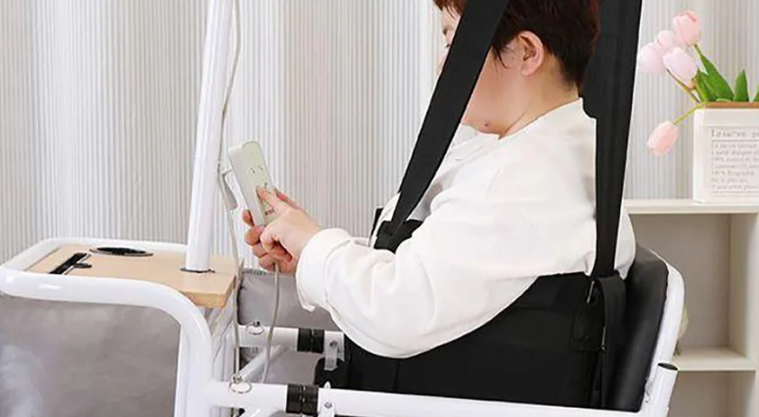
Home Stairlift: The Modern Revolution in Vertical Mobility Accessibility Solutions
Freedom Above the Stairs: A Technological Revolution to Regain Whole-Home Accessibility
In modern multi-level living environments, stairs—a fundamental architectural element—often become invisible barriers to free movement. chair lifts for stairs According to the World Health Organization, approximately 15% of the global elderly population is forced to abandon parts of their living space due to difficulty climbing stairs. As a core device for architectural accessibility renovation, the stairlift is reconnecting living areas separated by stairs through its innovative technological solutions, opening up a safe and comfortable vertical passage for people with limited mobility. This technology not only redefines the concept of architectural accessibility but also reshapes people's perception of multi-level homes.
Engineering Innovation: The Perfect Fusion of Precision Mechanics and Intelligent Control
The core technology of modern stairlifts lies in the groundbreaking design of their modular rail systems. Rail structures made from aerospace-grade 6061-T6 aluminum alloy, precision-machined via computer numerical control, can perfectly adapt to various stair configurations including straight, curved, and spiral. The newly developed seamless splicing technology ensures rail connection smoothness errors of less than 0.1 millimeters, chair lifts for stairs achieving operating stability standards comparable to those of operating rooms. The power system employs brushless DC servo motors paired with planetary gear reducers, controlling operating noise below 38 decibels—equivalent to the ambient sound level of a library.
Upgrades to the intelligent control system have significantly enhanced user experience. Multi-layer closed-loop control algorithms monitor operating status in real-time and automatically adjust torque output to maintain constant speed even on stairs with varying inclinations. The latest models are equipped with 3D environmental perception systems that construct 3D maps of the surrounding environment using LiDAR and stereoscopic vision cameras, intelligently planning optimal operating paths. Predictive maintenance technology analyzes operational data to warn of potential failures 300 hours in advance, reducing unexpected downtime to below 0.01%.
Safety System: A Multi-Layered Architecture for Comprehensive Protection
The safety of stairlifts is built on a five-dimensional protection system:
Structural Safety Dimension adopts a redundancy design philosophy, with all load-bearing components manufactured to an 8x safety factor. The emergency braking system includes three independent devices—electromagnetic braking, mechanical friction braking, and reverse self-locking—ensuring immediate and safe stopping under any abnormal conditions.
Operational Safety Dimension integrates multi-sensor fusion technology. Ultrasonic sensors scan the path ahead 50 times per second, automatically decelerating when obstacles are detected within 15 centimeters and stopping immediately within 5 centimeters. The weight sensing system continuously monitors seat load, triggering safety responses for abnormal overloading or sudden unloading.
Electrical Safety Dimension complies with medical device-level standards, featuring double insulation design and leakage protection devices. The backup power system is equipped with high-performance lithium iron phosphate batteries, supporting at least 30 complete trips during power outages and including automatic charging management to ensure readiness at all times.
User Safety Dimension focuses on user-centric design. An ergonomic five-point seatbelt system, adjustable armrests, non-slip foot pedals, and automatic lighting system together construct comprehensive usage protection. Particularly, progressive start technology designed for users with cognitive impairments avoids panic reactions caused by sudden movements through slow acceleration.
Data Safety Dimension ensures privacy protection. All operational data is transmitted using bank-level 256-bit encryption, and users can access system records via biometric identification or two-factor authentication. Remote monitoring functions strictly adhere to the principle of data minimization, collecting only necessary safety operation information.
Design Philosophy: Innovative Practice of Concealed Technology and Aesthetic Integration
The design of contemporary stairlifts has achieved a breakthrough in technological invisibility. The rail system employs a minimalist design language, with a minimum thickness of 6 centimeters, and surface treatments offer various options—from classic matte black to custom wood grain veneers—seamlessly integrating into different architectural styles. The foldable seat has a thickness of only 18 centimeters when not in use, barely affecting normal stair usage when retracted.
Material innovation has not only improved product performance but also expanded design possibilities. The application of carbon fiber composite materials reduces rail weight by 40% while increasing strength by 200%. Self-cleaning nano-coating technology enables effective resistance to UV aging, acid rain erosion, and pollutant adhesion during outdoor use. chair lifts for stairs The use of antibacterial copper alloys in frequently touched areas reduces the risk of pathogen transmission, making it particularly suitable for medical institutions and multi-user environments.
Customized design services have become an industry standard. Professional design teams obtain precise stair data through 3D laser scanning, combined with architectural style analysis, to provide fully personalized solutions. Non-invasive installation technology in historical building conservation projects uses special fixtures without drilling into precious building materials, offering an innovative path for accessibility renovation of cultural heritage buildings.
Economic Analysis: A Strategic Perspective on Long-Term Value Investment
From an economic perspective, stairlifts demonstrate significant life-cycle cost advantages:
Direct Cost Comparison Analysis:
Stairlift installation cost: 80,000-250,000 yuan (depending on configuration)
Cost of relocating to a single-story residence: approximately 350,000-800,000 yuan (including agency fees, taxes, and renovations)
Home elevator installation cost: 250,000-600,000 yuan (including shaft construction)
Long-term caregiver fees: 6,000-15,000 yuan/month
Indirect Value Assessment:
Property value retention: Maintaining the integrity of the original residence
Emotional value preservation: Continuing community connections and neighborhood relationships
Health benefits: Reducing medical expenses due to falls
Autonomy value: Social value of maintaining independent living ability
Notably, the financial support system is becoming increasingly comprehensive. More and more regions are including stairlifts in long-term care insurance coverage, and some cities provide special subsidies for old residential area renovations. Financial institutions offer adaptive housing renovation loans with preferential interest rates and flexible repayment plans. Manufacturers' full-cycle service contracts make maintenance costs transparent, with average annual maintenance expenses controlled between 1.5%-3% of the equipment value.
Installation Science: The Balancing Art of Precision Engineering and Architectural Protection
Professional stairlift installation is a systematic engineering process:
Phase 1: Precision Measurement and AssessmentProfessional engineers use 3D laser scanners to obtain precise geometric data of stairs, with errors controlled within 0.5 millimeters. Structural assessment includes wall material analysis, load-bearing capacity testing, and vibration characteristic measurement to ensure the safety and reliability of the installation foundation.
Phase 2: Personalized DesignBased on scanning data, engineers create digital twin models using BIM (Building Information Modeling) technology to simulate the entire equipment operation process. Customized design considerations include: user body dimensions, usage frequency, family member movement lines, future demand changes, etc.
Phase 3: Non-Invasive InstallationModern installation technology minimizes impact on building structures. Patented adaptive fixing systems do not require penetrating the main load-bearing structures of stairs, and in special cases, completely independent support frames can be used. Average installation time: 6-8 hours for straight rail systems, 2-3 days for complex curved rail systems.
Phase 4: Comprehensive Debugging and TrainingPost-installation debugging includes 100 system checks covering all mechanical, electrical, and safety aspects. User training adopts immersive virtual reality technology, allowing users to proficiently master various operating scenarios in a simulated environment.
Social Impact: A Catalyst for Building Inclusive Living Environments
The popularization of stairlifts is generating profound social effects:
Support for Independent Living Among the Elderly:Studies show that after installing a stairlift, the average number of years elderly people continue to live independently in multi-level homes is extended by 5.2 years. This not only reduces the demand for institutional elderly care but, more importantly, maintains the elderly's social connections and life continuity.
Realization of Equal Rights for Persons with Disabilities:Stairlifts provide persons with disabilities equal access to living spaces, representing a concrete practice of fulfilling the "accessible environment" commitment in the UN Convention on the Rights of Persons with Disabilities. More and more public buildings are beginning to install such equipment, promoting the development of social inclusiveness.
Promotion of Multi-Generational Family Relationships:In traditional multi-generational homes, stairlifts eliminate intergenerational barriers caused by floor separation, enabling natural interaction among family members of different ages and strengthening family bonds.
Urban Renewal and Community Vitality:In the renovation of old communities, the installation of stairlifts helps original residents "age in place," chair lifts for stairs maintaining the community's population structure and cultural continuity, and providing an innovative model for urban sustainable development.
Future Trends: Directions of Intelligence and Sustainable Development
Stairlift technology is rapidly developing towards hyper-intelligence and ecological sustainability:
Artificial Intelligence Integration:Next-generation products will be equipped with edge computing devices that analyze usage patterns through machine learning algorithms, predict maintenance needs, and automatically optimize operating parameters. The application of emotion recognition technology will enable devices to perceive user emotional states and adjust operating methods and interactive interfaces.
Energy Self-Sufficiency Systems:Photovoltaic thin-film technology will be directly integrated into device surfaces, paired with high-efficiency energy storage systems to achieve energy self-sufficiency. The latest experimental models have achieved 70% self-sufficiency in daily operating energy consumption.
Modular Upgrade Design:Adopting an open architecture allows users to add functional modules as needed, such as health monitoring, item transportation, environmental control, etc., extending the product's technical life cycle.
Circular Economy Model:Manufacturers are establishing complete recycling and remanufacturing systems, aiming to achieve a 95% material recycling rate by 2030. The promotion of rental service models reduces resource consumption, enabling more families to enjoy the fruits of technological progress at a reasonable cost.
Selection Guide: A Systematic Approach to Scientific Decision-Making
Choosing the right stairlift requires a systematic decision-making framework:
Needs Analysis Phase:
User capability assessment: Including physical function, cognitive status, usage frequency
Building characteristic analysis: Stair type, space dimensions, structural conditions
Family needs assessment: Multi-user needs, future change expectations, aesthetic preferences
Budget planning: Initial investment, long-term maintenance, upgrade possibilities
Product Comparison Phase:Establish an evaluation system covering 4 dimensions and 16 indicators:
Technical performance: Operating smoothness, noise level, energy efficiency, intelligence level
Safety features: Certification standards, protection systems, emergency capabilities, durability testing
User experience: Comfort design, operational convenience, maintenance ease, visual aesthetics
Service support: Warranty policy, response speed, upgrade path, training quality
Implementation Verification Phase:The recommended "three-step verification method" includes: personal experience at manufacturer showrooms, inspection of installed user cases, and third-party evaluation by professional institutions. Special attention should be paid to the qualification review of the installation team, requiring at least 10 installation cases of similar projects.
Conclusion: A Declaration of Freedom in the Vertical Dimension
The development trajectory of stairlifts reflects the continuous pursuit of inclusive design concepts in human society. This technology not only solves the problem of physical space accessibility but also redefines the concept of "home" at a deeper level—a full spatial domain truly belonging to every family member.
When architecture no longer becomes a limitation to life, and every floor is equally open to all, chair lifts for stairs what we see is not only the victory of technology but also the manifestation of humanistic spirit. Like a miniature bridge, the stairlift connects not only floor to floor but also independence and dignity, present and future, individual and family.
Against the backdrop of rapid aging and urbanization, this seemingly simple vertical mobility solution actually carries profound social significance. It allows multi-level homes to once again become ideal residences for the entire life cycle, enabling everyone to live freely in their familiar and beloved spaces, regardless of age, ability, or the passage of time.
This is not only technological progress but also civilizational progress—in this progress, every step is no longer an obstacle but a gentle step towards a more free, inclusive, and dignified life.
- PRE:manual hoyer lift
- NEXT:chair lifts for steps