



manual hoyer lift
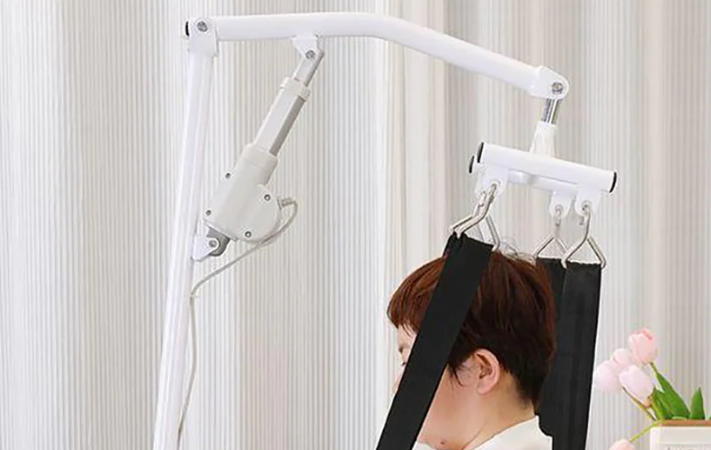
Manual Hoyer Lift: Safe Transfers Without Electricity – A Reliable Partner in Caregiving
When caring for a family member who is completely unable to move independently, the most distressing moments are often not the daily tasks of feeding or bathing, but those seemingly simple "transfer" moments – from bed to wheelchair, from wheelchair to toilet, or from the floor back to bed. Each movement feels like an adventure: a moment's inattention could strain the caregiver's back, while the care recipient might be injured by slipping or dragging, potentially causing skin damage or fractures.
At such times, a Manual Hoyer Lift often becomes a "lifesaver" for many families.
Despite its professional-sounding name, it is actually a structurally simple yet extremely reliable transfer device. Instead of relying on electricity, it uses a hydraulic hand pump system, combined with a specialized sling, to smoothly lift and move a person from one position to another. The caregiver only needs to stand beside it and repeatedly press the handle on the armrest to slowly lift the user. Once at the target position, gently releasing the valve allows control over the descent speed. The entire process is safe, controlled, and labor-saving.
The biggest advantage of a Manual Hoyer Lift is that it requires no electricity. This means it can still function normally even during power outages, in bathrooms without outlets, or when traveling to medical appointments or on trips. This is particularly crucial for families living in older communities, rural areas, or those who frequently need to take elders out.
Its structure is also relatively simple: there are no complex circuits, motors, or remote controls. It mainly consists of a metal frame, base casters, a hydraulic pump, and hooks. Because of this, it has a low failure rate and is easy to maintain – regular cleaning and periodic checks of loose screws and hydraulic smoothness ensure long-term stable use.
Compared to electric models, manual versions are usually more lightweight, and many designs support folding for storage. When not in use, they can be pushed into a corner or placed in a storage room without taking up much space. They are also more affordable, making them an ideal choice for families with limited budgets who urgently need a safe transfer solution.
Of course, using a Manual Hoyer Lift requires a certain level of skill and physical strength. Pressing the handle demands some arm strength, especially when lifting heavier users, which may require multiple presses to complete the lift. Therefore, if the caregiver is elderly or physically weak, or if transfers are needed multiple times a day, an electric model might be more suitable. However, for regular use once or twice a day and with a physically capable caregiver, the manual version is fully competent – and even more trusted for its reliability.
When using it, always ensure you have the appropriate sling – different types are needed for various purposes (e.g., toileting, bathing, bed transfers) to ensure proper support, comfort, and safety. Before each operation, check that the equipment is stable and the sling is not worn. The lifting process must be slow and steady; never rush.
More importantly, a Manual Hoyer Lift is not just a tool – it conveys respect and care. It saves the care recipient from the embarrassment and pain of being roughly lifted or dragged, and it spares the caregiver from having to "bear" the risk with their own body. This scientific and gentle transfer method protects not only physical safety but also human dignity.
The caregiving journey is long and arduous, but you don't have to bear all the weight alone. A Manual Hoyer Lift, though silent, can steadily support your loved one – and your own health and hope – during every transfer.
If you are anxious about safe transfer issues, consider learning more about this classic and practical assistive device. Sometimes, true care is found in a smooth, quiet, and dignified lift.