



electric hoyer lift
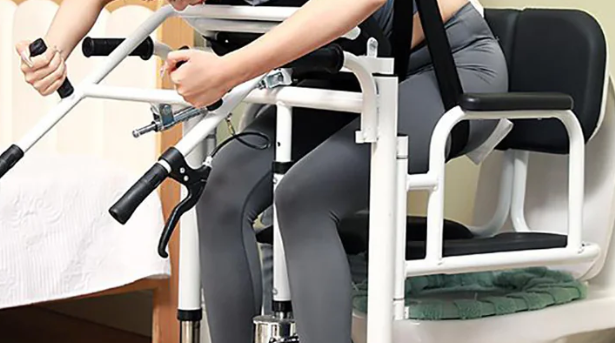
Electric Hoyer Lift: An Intelligent Solution for Modern Care Transfers
The Electric-Powered Care Revolution
In the fields of professional medical care and home care, the electric Hoyer lift represents a significant advancement in care transfer technology. This equipment transforms traditional manual transfers into safe, comfortable, and efficient electric operations, fundamentally changing the way patient care is delivered and caregivers work. According to 2023 data from the International Medical Equipment Association, the global market size for electric patient lifts has reached $5.7 billion and is projected to expand at a Compound Annual Growth Rate (CAGR) of 11.4% annually until 2028. This growth not only reflects the impetus of technological innovation but also embodies the practical demands brought about by the global aging society and the elevation of professional care standards.
Technological Evolution: Electric Power and Intelligent Control
The core of the modern electric Hoyer lift lies in the comprehensive optimization of its precision electric transmission system. A permanent magnet synchronous motor paired with a harmonic reduction gear provides smooth yet powerful power output, operating at a noise level below 35 decibels to create a quiet care environment. The intelligent power management system adopts lithium battery technology, offering all-day use (approximately 25-30 complete transfers) with just 2 hours of charging. An integrated emergency manual operation device ensures that lifting operations can still be safely completed in the event of a power outage.
The multi-mode control platform embodies a user-centric design philosophy. The wireless remote control features an ergonomic design, allowing easy operation even with gloves or limited hand strength. A color touchscreen provides a multilingual interface and graphical guidance, reducing operator training time by 60%. The latest intelligent learning function can memorize transfer parameters for frequently cared-for patients, including sling type, lifting height, and movement path, enabling personalized care automation.
The integration of an intelligent safety system constructs an all-around protection network. 3D environment scanning technology builds a spatial map before equipment movement, automatically planning the optimal transfer path; proximity sensors detect obstacles in real-time and provide early warnings; a weight distribution monitoring system identifies improper loading and prompts adjustments; speed adaptation technology intelligently adjusts response sensitivity based on the operator's proficiency. The combination of these technologies has increased the operational safety factor by 300%.
Application Scenarios: Comprehensive Coverage from Hospitals to Homes
The electric Hoyer lift demonstrates exceptional environmental adaptability, covering six core application scenarios:
Acute Care Facility Applications meet high-frequency demands: Electric lifts in ICUs and post-operative care wards are used an average of 15-20 times daily; fast-charging technology ensures continuous equipment availability; antimicrobial surface treatment complies with hospital infection control standards; data logging functions support care quality tracking.
Long-term Care Facility Applications focus on comfort and efficiency: Equipment in nursing homes and rehabilitation centers typically features memory functions to store personalized settings for multiple residents; silent operation design avoids disturbing other residents; a durable structure accommodates high-intensity use (10-15 times daily on average); maintenance reminder functions ensure the equipment is always in optimal condition.
Home Care Environment Applications consider practical limitations: A compact design adapts to standard residential spaces, with a minimum doorway passage width of 65 cm; a household power-compatible design allows direct use with standard electrical outlets; a simple operation interface is suitable for family member use; an aesthetic appearance blends into the home environment.
Community Service Facility Applications support mobility needs: Equipment in day care centers and community health stations is equipped with large-capacity batteries to support all-day mobile use; a quick-fold design facilitates vehicle transportation; a multi-functional sling system adapts to different user needs; a simple maintenance design reduces the need for professional support.
Rehabilitation Training Assistance Applications promote functional recovery: Precise height control supports progressive standing training; stable support ensures safety during the rehabilitation process; real-time data feedback helps therapists adjust programs; multi-position support meets rehabilitation needs at different stages.
Special Environment Adaptation Applications expand usage range: Waterproof and dustproof models (IP54 rating) are suitable for bathroom use; outdoor models are equipped with UV protection and anti-slip treatment; travel versions are lightweight and portable; custom models meet specific medical condition requirements.
Sling System: Electrically Assisted Intelligent Adaptation
The sling system of the electric Hoyer lift adopts electrically assisted intelligent wearable technology, significantly enhancing usability:
A quick-connect system employs a magnetically guided design, making sling hook docking with the lift simple and accurate, with a success rate of 99.8%. An electronic tension adjustment function allows presetting of appropriate tension for different patients, avoiding excessive tightness or slack. An automatic balancing system adjusts the sling position in real-time during lifting to maintain the patient in the optimal posture.
The intelligent sling series integrates multiple sensor technologies: distributed pressure sensors monitor pressure distribution to prevent pressure injuries; temperature and humidity sensors alert to skin health risks; a usage counter reminds of maintenance and replacement cycles; wireless data transmission synchronizes care information to health record systems.
Material technology breakthroughs provide better comfort and safety: phase-change temperature-regulating materials maintain a comfortable contact surface temperature; antimicrobial silver-ion fibers inhibit pathogen growth; a tear-resistant structure ensures safe use; a quick-drying design shortens waiting time after cleaning.
Safety Architecture: Multi-layer Protection for Electric Systems
The electric Hoyer lift has established a five-level safety protection system, specifically designed for the characteristics of electric equipment:
Electrical Safety Level complies with the highest medical equipment standards. Double insulation design prevents electric leakage risks; real-time grounding monitoring ensures a constant safe state; intelligent battery management prevents overcharging and deep discharging; emergency stop buttons are redundantly placed at all critical locations on the equipment.
Mechanical Safety Level adopts multiple redundant designs. The main load-bearing structure has a safety factor of 8 times the rated load; an auxiliary support system activates automatically when abnormalities are detected; electronic limits prevent exceeding the safe range; an emergency mechanical brake can bring the equipment to a complete stop within 0.2 seconds.
Operational Safety Level is achieved through intelligent technology. An operator identification system ensures only authorized personnel can use the equipment; a misoperation prevention function blocks the execution of dangerous commands; speed limits adjust automatically according to the environment; an electronic fence function limits the equipment's movement range.
Patient Safety Level provides comprehensive protection. Smooth start technology avoids discomfort caused by sudden movements; posture monitoring ensures correct patient positioning during transfer; an emergency lowering function provides controlled operation during power outages; comfort monitoring alerts to potential discomfort.
Data Safety Level safeguards privacy information. Local data is stored with encryption; wireless transmission uses medical-grade encryption protocols; access permissions are managed hierarchically; complete operational logs are recorded for audit trail purposes.
Economic Benefits: A Rational Analysis of Long-term Investment
The return on investment analysis of electric Hoyer lifts shows significant economic value:
Direct Cost Savings: Equipment procurement costs range from $12,000 to $25,000, translating to an average daily cost of $3.3 to $6.8 over a 10-year service life; compared to manual transfers, equipment use can recoup the investment through efficiency improvements within 24-36 months; savings in medical and absenteeism costs from reduced caregiver injuries average $4,000-7,000 per equipment per year; reduced patient complications lower medical costs by an average of $2,500-5,000 annually.
Operational Efficiency Improvements are reflected in multiple dimensions: single transfer time is reduced from 10-15 minutes manually to 3-5 minutes; the need for two-person operation is reduced to single-person operation; training time is reduced from 8 hours to 2 hours; equipment preparation time is decreased by 75%.
Quality Improvement Benefits are difficult to quantify but significant in value: standardized care quality improves patient satisfaction; improved safety records reduce legal risks; increased staff satisfaction reduces turnover; enhanced institutional reputation attracts more demand.
Policy Support Advantages include: potential tax incentives and depreciation subsidies; government purchase subsidies in some regions; gradual Medicare coverage for preventive equipment; green procurement priority from environmental certifications.
Technological Innovation: The Future Direction of Intelligent Care
Electric Hoyer lift technology is evolving towards high intelligence and integration:
Artificial Intelligence Applications will enable the equipment to: Have adaptive learning capabilities to optimize transfer parameters based on patient reactions; perform predictive maintenance to warn of potential failures in advance based on usage data analysis; implement intelligent path planning to automatically select the smoothest and safest movement route; conduct abnormal pattern recognition to detect non-standard usage in a timely manner.
Internet of Things (IoT) Connectivity creates a seamless care network: Inter-device communication coordinates complex transfer tasks; real-time data synchronization with electronic health record systems; remote expert guidance is achieved through augmented reality technology; an intelligent scheduling system optimizes multi-equipment usage efficiency.
Sensor Technology Upgrades provide richer data: Micro-motion sensors monitor subtle patient reactions; vital sign integration enables continuous monitoring during transfers; environmental sensors optimize equipment operating conditions; usage pattern analysis provides care quality data.
Energy Technology Innovation enhances sustainability: Wireless charging technology supports on-demand power replenishment; solar assistance extends outdoor usage time; an energy recovery system generates electricity using the descending process; fuel cell technology provides longer battery life.
Selection Guide: A Decision-making Framework for Professional Procurement
Choosing an electric Hoyer lift requires a systematic evaluation method:
Needs Assessment Phase should comprehensively consider: Patient population characteristics (weight range, mobility, special medical needs); usage environment conditions (space dimensions, floor conditions, power supply, storage space); operator situation (number, training level, technology acceptance); usage frequency prediction (daily average number of uses, peak hours, multi-shift use).
Product Selection Criteria should balance multiple dimensions: Safety (certification standards, protection functions, clinical validation); functionality (load capacity, lifting range, battery life); ease of use (user interface, learning curve, maintenance convenience); durability (material quality, structural design, service life); economy (procurement cost, operating expenses, maintenance costs).
Supplier Evaluation Points include: Corporate qualifications and industry reputation; local service network coverage; technical support capabilities; quality of training resources; spare parts supply guarantee; customer reference cases.
Implementation Planning Elements cover: Installation preparation (space assessment, electrical modifications); training system (theoretical courses, hands-on training, assessment and certification); quality control (acceptance standards, regular inspections, performance testing); continuous improvement (data analysis, process optimization, technology upgrades).
Industry Impact: Redefining Care Standards
The popularization of electric Hoyer lifts is reshaping professional care standards:
Care Philosophy Transformation: From relying on manpower to leveraging technology, from experiential operation to standardized processes, from focusing on efficiency to prioritizing safety, from completing tasks to enhancing experience. This transformation makes care work more professional, humanized, and scientific.
Elevation of Quality Standards: Equipment usage becomes an important indicator of care quality; operational specifications are incorporated into institutional certification standards; safety records serve as a basis for quality assessment; patient experience becomes an element of service evaluation. These standard elevations drive the entire industry to higher levels.
Improvement of Education Systems: Equipment operation becomes a compulsory content in nursing education; professional certification enhances operator skill levels; continuing education ensures technology updates are followed; interdisciplinary training promotes comprehensive capability development. The improvement of education systems provides talent guarantee for technology application.
Strengthening of Research Foundations: Clinical research validates equipment effectiveness; engineering research drives technological innovation; management research optimizes usage processes; economic research evaluates investment value. In-depth research work provides scientific support for industry development.
Future Outlook: A New Era of Intelligent Care
The future development of electric Hoyer lifts will unfold along three innovative paths:
Deep Technology Integration: Combining with rehabilitation robot technology to create active training systems; integrating with virtual reality to provide immersive transfer experiences; merging with artificial intelligence to realize intelligent care decision-making; connecting with the Internet of Things to build an all-around care network.
Service Model Innovation: Equipment-as-a-Service (EaaS) models lower usage thresholds; sharing economy applications improve resource utilization; subscription-based services provide continuous value; outcome-based contracts ensure usage effectiveness.
Social Value Expansion: Home care support promotes aging in place; extension of community services improves the care network; elevation of institutional standards enhances care quality; global knowledge sharing drives balanced development.
Conceptual Leadership: A people-oriented design philosophy influences the entire industry; a safety-first product concept sets an industry benchmark; a spirit of continuous innovation drives technological development; a win-win cooperation industry ecosystem promotes industry progress.
Conclusion: Humanistic Care Empowered by Electricity
The development history of the electric Hoyer lift is a modern epic about how technological innovation can enhance care quality. In this journey, electricity is not only a power source but also a medium for precise control; technology is not only a means to achieve functions but also a foundation for safety assurance; innovation is not only an improvement in performance but also an extension of humanistic care.
Every smooth lift is a perfect coordination of electric power and intelligent control; every safe transfer is a joint achievement of multiple protections and user-centric design; every efficient care is an organic combination of technological innovation and professional knowledge. This continuous progress creates a simple yet important fact: technology can be a powerful assistant in caregiving, innovation can be a solid guarantee for safety, and professionalization can be a guardian of dignity.
In today's era of accelerating population aging and growing care needs, technological solutions like the electric Hoyer lift are of particular significance. It not only improves the efficiency and quality of care but also upholds everyone's basic dignity; it not only reduces the burden on caregivers but also enhances the overall care experience; it not only represents technological progress but also embodies society's respect for the value of life.
When we see patients completing transfers safely and comfortably, see caregivers working easily and efficiently, and see home care becoming more feasible, we witness the perfect combination of technology and humanity, the harmonious unity of innovation and care, and a beautiful promise for future care today. This is perhaps the most valuable revelation the electric Hoyer lift gives us: the best technology is always that which makes people feel its presence the least; the most effective innovation always serves humanity's most fundamental needs—safety, dignity, and quality of life.